Compact exercise equipment for small spaces can create a capable workout area without dominating the home. The smartest tools fold, stack, adjust, or serve several purposes. They support movement while respecting shared rooms, limited storage, and visual calm. Small-space fitness succeeds when setup and cleanup remain quick. Equipment should fit closets, corners, shelves, or under-bed storage safely. It should also provide enough challenge to support progress. A compact solution does not need to feel temporary or incomplete. Bands, adjustable weights, sliders, and foldable cardio tools can work together effectively. Careful selection prevents clutter from becoming another barrier to exercise. The result is a home that supports fitness without looking like a crowded gym.
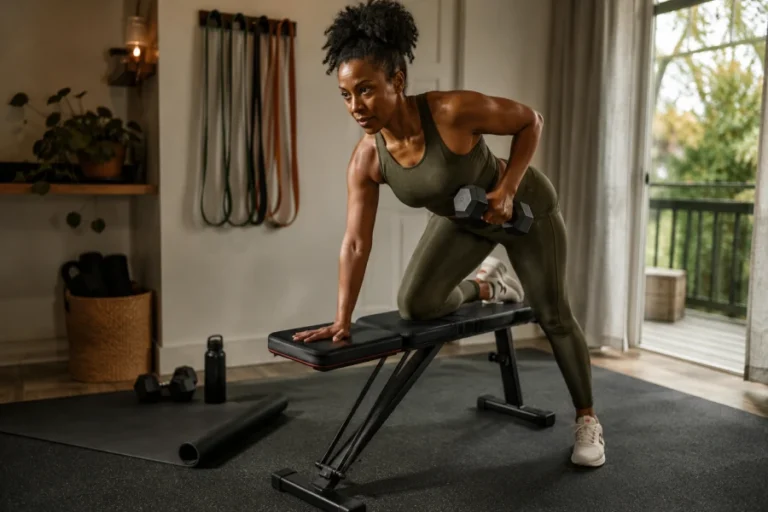
Single-purpose equipment can consume valuable room while serving only one movement. Multipurpose tools provide better value when storage remains limited. Resistance bands support strength, mobility, warm-ups, and assisted stretching. Adjustable dumbbells replace several fixed pairs within a smaller footprint. A bench can support pressing, stepping, split squats, and seated exercises. Sliders add core and lower-body challenge while fitting inside a drawer. A thoughtful collection of small-space fitness equipment should earn storage through versatility. Each item needs a clear role across several workouts. Fewer tools can still create substantial variety. Multipurpose design keeps the space useful without letting equipment take control.
Good storage reduces setup time and protects the room’s everyday function. Choose one defined location for every piece of equipment. Baskets, vertical racks, or under-bed containers can work well. Heavy items should remain low and stable to prevent injury. Bands should stay away from sharp edges and extreme heat. Foldable machines need enough clearance for safe opening and closing. Avoid stacking equipment in ways that damage handles or locking systems. Visible storage can still look orderly when the collection remains limited. Cleanup should take less than two minutes after a session. A simple storage system makes the next workout easier to begin.
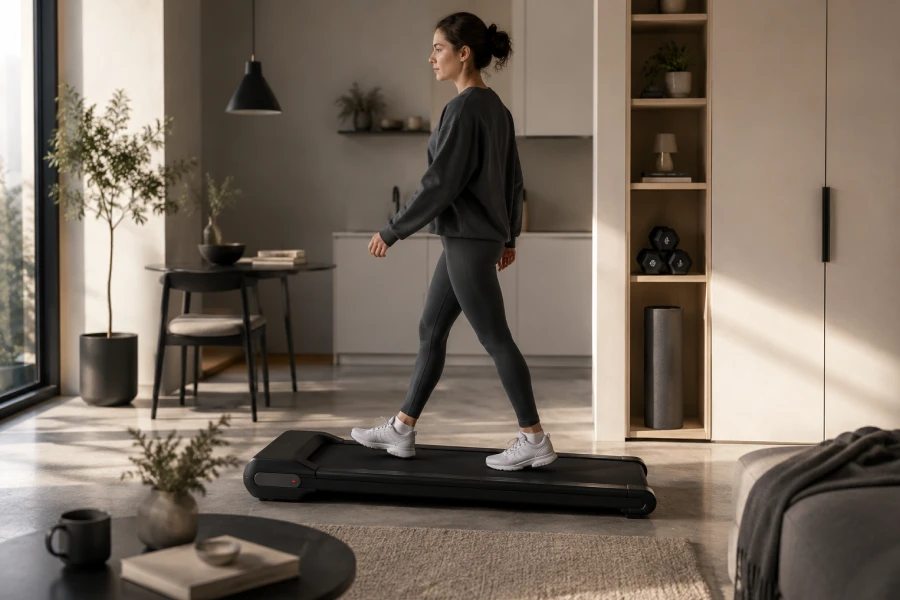
Cardio does not always require a large treadmill or elliptical machine. A walking pad can slide beneath furniture when the model allows safe storage. Foldable bikes reduce footprint while offering adjustable resistance. Step platforms support intervals and can store vertically. Jump ropes create intense sessions but require ceiling height and noise tolerance. Mini steppers provide compact movement, although stability and comfort vary. Bodyweight circuits can raise heart rate without equipment. An apartment workout gear plan should consider neighbors, flooring, and shared walls. Low-impact options often provide the best balance in multifamily homes. Small spaces can still support meaningful cardiovascular training.
Noise matters when workouts happen near neighbors, children, or remote workers. Rubber-coated weights reduce impact compared with bare metal. A dense mat can soften movement and protect flooring. Controlled repetitions create less noise than dropping equipment. Bikes and walking pads vary significantly in motor and belt sound. Read independent reviews that discuss real household use. Avoid jumping movements when the building transmits impact easily. Headphones can replace loud speakers without reducing energy. Quiet training expands the number of times exercise can happen. Respectful equipment choices make home fitness easier for everyone sharing the environment.
Compact design should never require unstable construction or weak locking mechanisms. Check weight capacities, hinges, fasteners, and adjustment points carefully. Foldable products should open smoothly and lock securely. Adjustable weights need reliable plates or selectors that remain stable. Bands should resist cracking and include clear tension information. Handles and grips should feel comfortable during repeated use. A set of strength training at home tools can remain compact while still feeling durable. Warranties and replacement parts provide additional confidence. Cheap equipment becomes costly when it fails quickly or feels unsafe. Durability preserves both the budget and the workout routine.
The room should return to its normal purpose after the workout ends. Choose equipment that stores without requiring furniture rearrangement. Keep cables, bands, and small accessories together. Avoid purchasing items before identifying their exact storage location. Measure closets, shelves, and under-bed clearance before shopping. Folded dimensions matter more than advertising images suggest. A quick cleanup ritual protects the room from visual overload. It also signals that the workout has a defined beginning and ending. Fitness should support the home rather than compete with it. The best compact setup feels available during exercise and almost invisible afterward.


Leave a comment