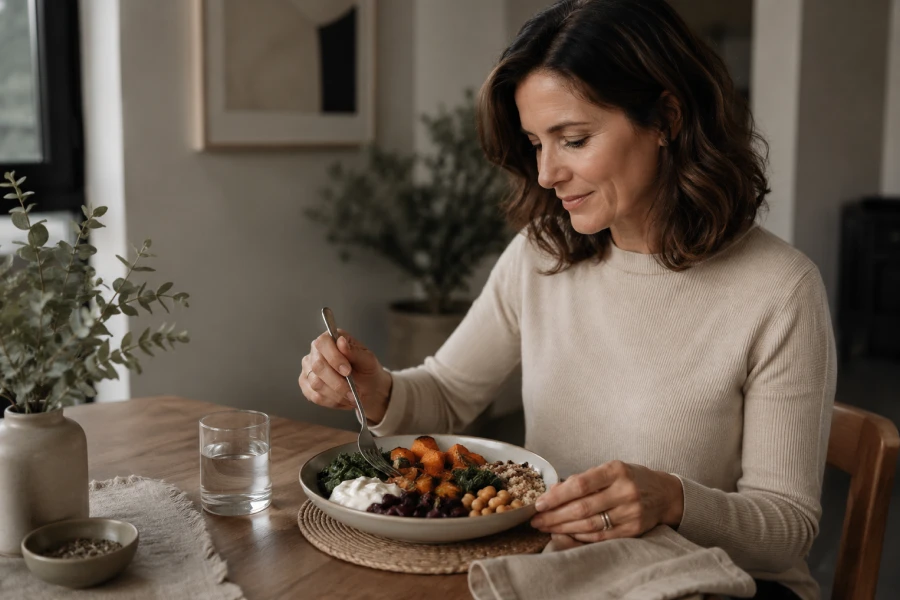
Anti-aging nutrition for women does not require rare ingredients, rigid menus, or expensive wellness rituals. It begins with food that supports the body’s changing priorities through adulthood. Protein protects muscle, fiber supports digestion, and colorful plants provide protective compounds. Healthy fats contribute to satisfaction while supporting heart and brain function. These elements can appear in simple meals prepared without culinary perfection. A bowl, salad, soup, or sheet-pan dinner can carry meaningful nutritional value. The important shift involves viewing food as daily support rather than constant restriction. Aging well depends on nourishment that remains practical through busy seasons. Ordinary plates become powerful when their balance appears again and again. Longevity often looks less dramatic than marketing suggests, yet far more achievable.
Many women have spent years learning to eat less rather than nourish better. That mindset can become especially unhelpful as muscle and bone require greater attention. Restriction may reduce calories while also reducing protein, minerals, and meal satisfaction. The body then receives fewer resources for recovery, energy, and everyday strength. A better strategy adds valuable foods before removing anything. More vegetables, beans, fish, eggs, yogurt, and whole grains can shift quality quickly. These additions naturally improve fullness and create better nutritional coverage. They also reduce the emotional tension created by strict rules. Learning about women’s wellness nutrition helps replace fear with informed, supportive choices. Abundance can serve healthy aging more effectively than constant deprivation.
Aging is not a nutritional problem that food must somehow solve. It is a natural process influenced by habits, genetics, environment, and health care. Food supports the process by helping the body maintain function and resilience. This perspective removes the pressure to chase impossible promises. It also directs attention toward outcomes that truly matter. Women may value stable energy, comfortable digestion, strong bones, and clear thinking. They may also want meals that support social connection and personal enjoyment. A sustainable plan must protect those human benefits alongside nutritional goals. The language of anti-aging becomes more useful when it means supporting capability. Food then becomes an ally for living, not a weapon against time.
Midlife can bring shifts in appetite, sleep, body composition, and temperature regulation. Nutrition cannot erase those changes, but it can strengthen the foundation beneath them. Regular protein may help preserve muscle while balanced meals support steadier energy. Fiber-rich foods contribute to digestive health and may support heart health. Soy foods, legumes, seeds, and whole grains add useful plant compounds. Hydration also deserves attention because thirst signals can become less noticeable. Meals should remain satisfying enough to prevent constant grazing and fatigue. A structured approach to menopause nutrition support can make these priorities easier to manage. Individual needs still vary, especially when medical conditions or medications influence nutrition. Thoughtful adjustments work best when they respect the whole person.
Nutritious meals will not remain consistent when they feel bland or joyless. Flavor helps healthy choices compete with convenient, highly appealing alternatives. Herbs, citrus, garlic, spices, and vinegars can transform simple ingredients. Roasting vegetables adds depth, while toasted seeds provide texture and richness. Sauces can connect grains, protein, and produce into a satisfying meal. Variety also prevents the boredom that often ends rigid eating plans. Seasonal foods offer natural changes without requiring a complete reset. Cultural dishes deserve a place because they carry familiarity and meaning. A nourishing pattern should expand pleasure rather than shrink it. Enjoyment is not a nutritional failure; it is often the reason consistency lasts.
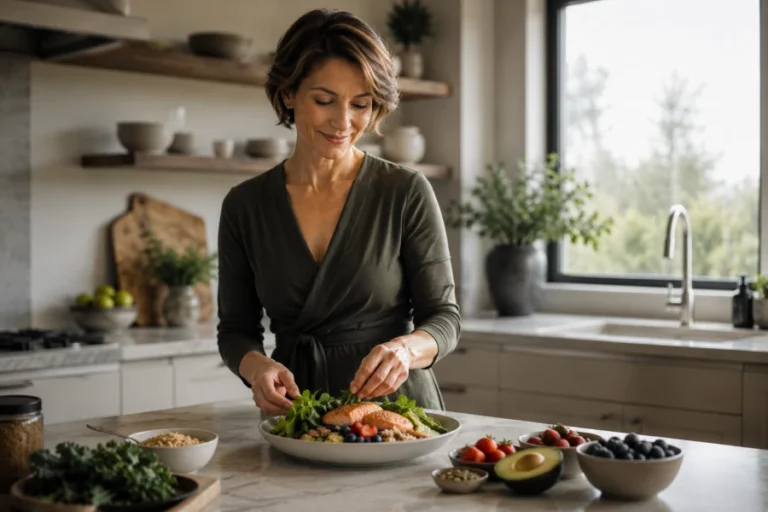
Busy weeks demand a simpler version of healthy eating, not abandonment. Keep several fast proteins available, including eggs, yogurt, beans, and canned fish. Use frozen produce when washing and chopping feels unrealistic. Cook one grain or starch that can support several meals. Choose sauces that make repeated ingredients taste different each day. A snack can combine fruit, nuts, cheese, or yogurt for greater staying power. Planning does not need to involve dozens of containers. It only needs to reduce the number of decisions made while hungry. Resources centered on healthy aging habits can provide structure without demanding perfection. Simplicity protects progress when motivation and time both run low.
No single meal pattern suits every woman, schedule, culture, or health history. Personalization begins by noticing energy, digestion, satisfaction, and recovery after meals. Preferences matter because disliked foods rarely become dependable habits. Budget matters because an unaffordable plan cannot remain sustainable. Medical guidance also matters when symptoms, allergies, or medications shape choices. The best approach evolves as the body and lifestyle change. Some seasons call for more preparation, while others require strategic convenience. Curiosity helps women adjust without judging every imperfect day. Progress comes from learning which foods create strength and steadiness personally. An ordinary plate becomes exceptional when it consistently supports the life around it.



Leave a comment